

Why Men Pull Away in Relationships: The Weight of Wearing Armour All Day
Written by Evan Vukets, RCC, Registered Clinical Counsellor in Abbotsford, BC. I have specialized in men's mental health since completing my graduate training in 2019, and this pattern is one of the most consistent things I see in my work. Learn more about me.
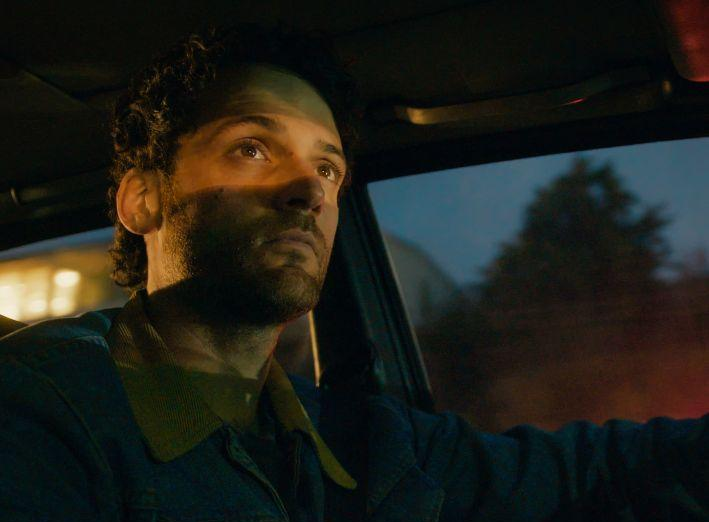
There is a pattern I have observed consistently since I began specializing in men's mental health. A man who is on paper doing well in life. He shows up at his job, keeps things together at home, and is reliable for those around him. Others often see him as a hard worker, competent and steady.
These men often come to my office because they tell me their partner believes they need therapy because they feel alone, are told they pull away when things get real. And while he may physically be there; fatigue, exhaustion, and pressures have him never fully present in his life.
His acts of service don't make those around him feel connected, and it is not because he does not care or a lack of trying. From the men I have worked with through this challenge, it is almost always the opposite.
The Armour Men Wear All Day
Most men I work with are carrying more weight than the people around them realize. Not necessarily the life or death pressures that are loud or dramatic, but the accumulating weight of trying to be who they believe everyone else needs them to be.
At work, there is a version of themselves they maintain, the version who is competent, decisive, and strong. The person who has the answer or finds one, the one who does not let things show. Whether that is a job site, a boardroom, or a classroom, most men spend their working hours in some version of armour. A managed presentation of themselves that gets the job done and the relationships functional.
Outside of work, the armour is still used.
With friends, there is a version.
With ageing parents, there is a version.
Even with their kids, there is a version of dad that gets maintained, the one who is patient, present, and not falling apart about whatever the day brought.
The armour is not dishonest. Most of the time it is genuinely what the situation requires. But it is also effortful in a way that does not always get acknowledged, including by the man wearing it. By the end of a full day of being that version of himself, something in him is depleted.
And it is hard to come home when feeling depleted by the world and the roles we believe we have to play.
What Happens When the Armour Comes Off
There is an expectation that home is supposed to be where the armour comes off. Where it is safe to just be. And in the best version of things, it is exactly that.
But for a lot of men, what comes off with the armour is not peace or a sense of relaxation. It is everything that was held back during the day:
The fatigue.
The tension.
The things that did not get processed, the low-grade pressure that has been running since before breakfast.
The man who was composed all day is now flat, quiet, and withdrawn into himself in a way that his partner experiences as absence.
If she asks how he is, he will probably say fine.
If she tries to connect, he only has capacity to give her short answers.
If she pushes a little, he will probably go quieter or reach for his phone.
From her perspective, she finally has him home and he is not available. From his perspective, he is exhausted in a specific way that does not have a name yet, and the last thing he has capacity for is a conversation that requires him to perform yet another version of himself.
Neither of those perspectives is wrong, but without effective communication they are effectively speaking different languages.
This is the pulling away that partners often describe and the lack of knowing each other. Not a decision, not a rejection, not evidence that the relationship no longer matters. It is a man whose resources are genuinely depleted trying to regulate in the only way that feels available, which is quiet and distance, and not yet having the language to explain that to the person it is affecting.
When Withdrawal Becomes Stonewalling
While not having capacity every so often for conversations after a busy day is human, a build up of days where the silence becomes the norm can be very damaging to a relationship. There is an important distinction worth making between a man who needs to decompress and one who has moved into a more entrenched pattern of withdrawal.
Needing quiet after a demanding day is legitimate. Many of the men I work with find that they regulate more easily through space and quiet than immediate conversation. The problem develops when the withdrawal becomes the default response to anything emotionally demanding, not just the end of a hard day but any moment where real connection is required. Where the quiet stops being recovery and becomes avoidance. Where the distance stops being temporary and starts shaping the whole relationship.
This is what the Gottman Institute calls stonewalling, and I wrote about it in depth in the 4 Horsemen post. Stonewalling is not always a choice. Gottman's research shows that during emotionally loaded conversations, men are more likely than women to experience flooding, a state of physiological overwhelm where the capacity to think clearly and respond constructively drops significantly. The shutdown is often less a decision than a nervous system that has hit its limit.
But even when stonewalling is driven by overwhelm rather than indifference, the impact on the relationship is the same. The other person experiences it as absence. Over time, they stop reaching. And the man who was pulling away to protect the relationship ends up with a relationship that has quietly grown cold or nonexistent.
The Man Who Has Always Wanted to Explain This
Here is something I notice consistently in sessions. When a man finally has language for this pattern, something in him settles. Not because the pattern is fixed, but because for the first time he can see it clearly rather than just feel accused by it.
He was not pulling away because he did not care. He was pulling away because he cared about everything and had nothing left. Because he had spent the day being strong for everyone and the one place he thought he could just exist, home, was also asking something of him. Because the armour that kept him functional all day had made him less accessible to the person who most needed him to be accessible.
This is the thing many men have wanted to explain to their partners and have not had the words for. Not because they are emotionally unavailable, but because the vocabulary for this specific experience is not one most men are handed. The post on why men say I don't know speaks directly to this, the gap between having an experience and having the language to name it. And the post on why men joke when things get serious covers another version of the same instinct, the move toward humour or deflection when direct expression does not feel available.
What I find in the work is that most men do want to connect. They want to be known by their partners. They want the relationship to feel close. They just do not always have a way in that does not feel like one more demand on a tank that is already running low.
Armour Fatigue and What It Builds Up To
There is a longer arc that can come from wearing the armour all day, and the impact it has on the man wearing it and not just the impact on his relationships. Armour fatigue is not just a daily experience. It accumulates over time in ways that can quietly shift a man's whole orientation toward his relationship and toward himself.
A man who has been holding the armour in place for years, who has never had a space to put it down and be uncertain or tired or struggling without that feeling like a failure, tends to develop a specific kind of distance from his own inner life. He becomes fluent in managing and less fluent in feeling. He can tell you what happened, but he struggles to tell you what it meant or what it cost.
This connects to something I wrote about in the post on why men struggle to identify their emotions. The emotional vocabulary does not develop in isolation. It develops through practice, through relationships where it is safe to name things, through experiences of having an inner life that matters to someone. When those experiences are scarce, the vocabulary stays limited. And a man with limited emotional vocabulary in a relationship that requires emotional expression is going to pull away, not because he is choosing distance but because he genuinely does not know how to do what is being asked of him.
What This Looks Like When It Starts to Shift
The shift does not require a man to become someone different. It requires him to have a little more available when the armour comes off.
Sometimes that means having language for what is happening. Being able to say:
"I am spent from today and I need twenty minutes before I can be present"
rather than going quiet and leaving his partner to interpret the silence. That one sentence changes the shape of the evening entirely. It is not emotional disclosure in any heavy sense. It is just enough information that the other person does not have to fill the silence with their worst interpretation.
Sometimes it means understanding the pattern well enough to catch it earlier. To notice the depletion before it becomes withdrawal. To know that the end of a hard week is a vulnerable time for the relationship and to do something small and deliberate rather than letting the autopilot take over.
And sometimes it means having a space outside the relationship where the armour actually comes off. Where the accumulation gets somewhere to go rather than just sitting in the body and coming out as distance. This is one of the things counselling can offer that is genuinely difficult to find elsewhere. Not a place to be fixed, but a place to put the weight down for an hour and look at it honestly.
The post on why men shut down during arguments goes deeper on what flooding looks like in the middle of a conflict and what the earlier intervention points are. And the post on I'm fine and what it actually means covers the specific signal men send when they are carrying more than they are saying.
If you are reading this and recognizing yourself in it, know that it is not a pattern that can't be worked on. It is not a pathology or sentence, but a starting point. I work with men in Abbotsford and online across BC who are navigating exactly this, men who are showing up in every practical sense and still feeling like they are somehow getting connection wrong. A free consultation is available if you want to explore what that could look like.
Common Questions About Why Men Pull Away
Why do men pull away in relationships?
In my experience working with men since specializing in men's mental health in 2019, pulling away is rarely about the relationship not mattering. It is more often about depletion. A man who has been performing a managed version of himself all day, at work, with friends, in every social context, often has very little left when he gets home. The withdrawal is less a choice than not recognizing a tank running low.
Is pulling away the same as not caring?
No, and this is one of the most important distinctions to make. Men often pull away most in the relationships that matter most, because those relationships are also the ones that require the most of them emotionally. The absence is not indifference. It is usually exhaustion or overwhelm that does not yet have words.
What is the difference between needing space and stonewalling?
Needing space after a demanding day is legitimate and many of the men I work with find that they regulate more easily through space and quiet than immediate conversation.
Stonewalling is what develops when withdrawal becomes the default response to anything emotionally demanding, not just recovery but avoidance. The distinction is important because the first is a need and the second is a pattern that damages the relationship over time. The 4 Horsemen post covers stonewalling in more depth.
How do I explain to my partner why I pull away without it becoming an argument?
Having a name for it before the moment helps significantly. Something as simple as I am running on empty from today and I need a bit before I can be present gives your partner information rather than silence. It is not a full emotional disclosure. It is enough that the distance does not have to be interpreted as rejection.
Can counselling help with pulling away?
Yes. One of the most useful things counselling offers is a space outside the relationship where the accumulation has somewhere to go. Having somewhere outside the relationship to make sense of what you are carrying can help create more room for connection at home. It is not about being fixed, it is about not having the relationship be the only place where the armour has to come off.


Comments